Have you ever received a parking ticket when you thought you were back to your car on time? Each month, over 32,000 people visit this site seeking guidance on tickets and fines, just like you. It can seem a bit scary, but there’s no need to worry.
In this article, we’ll help you understand:
- What a Penalty Charge Notice (PCN) is and why you might get one.
- The real story about the 5-minute observation rule.
- How to appeal if you think your PCN was given in error.
- What happens if you don’t pay a PCN.
- Places you can get more help if you need it.
We know how it feels to get a PCN and what worries you may have. So, take a deep breath and read on. We are here to help you understand and deal with your parking ticket.
Not sure what to write in your parking appeal?
The form asks for contact details to deliver your free MoneyNerd template.
Add your notice details, reasons for disputing the charge and relevant evidence.

General information, not legal advice. Follow your notice’s instructions and deadlines; adapt the wording to your circumstances. No outcome is guaranteed.
Don’t Confuse a Penalty Charge Notice With a Parking Charge Notice
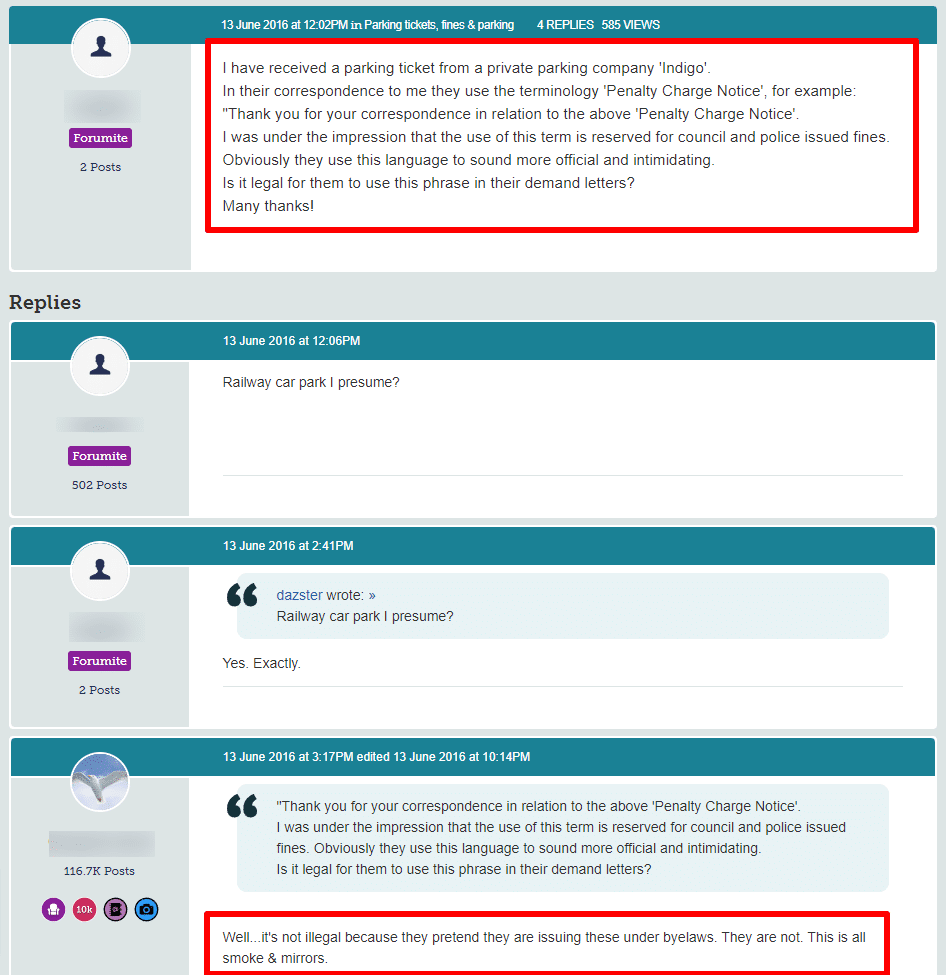
Something I need to cover here is the confusion that surrounds the difference between a parking charge notice and a penalty charge notice. Even though they share the same acronym, they are not the same.
A parking charge notice is a private parking ticket. These are not legally enforceable and are handed out by private parking operators. For example, your local supermarket probably uses a private parking operator to manage its car park. In effect, these are nothing more than an invoice for a supposed parking fee.
On the other hand, a penalty charge notice is an official notification that a fine has been levied against you. These are legally enforceable, as they are issued by a government organisation or their agent.
What Is the 5-Minute Observation Rule?
As I already mentioned, you are given a 10-minute grace period to return to your vehicle after your paid parking has expired. For some reason, this has come to be known as the five-minute rule.
This rule is very easy to understand. If you are paying for parking, or are parked in a bay that has a fixed time limit that you can stay, as long as you return to your vehicle within this time limit plus 10 minutes, you shouldn’t receive a parking fine.
For example, if you park on a public road and there was a sign saying the maximum duration of your stay is an hour, and you return your vehicle within an hour and 10 minutes, you should be perfectly safe.
What to include in your parking appeal
The form asks for contact details to deliver your free MoneyNerd template.
Include the notice reference, your reasons, supporting evidence and the action you want the issuer to take.
The correct process depends on the notice and where it was issued.
General information, not legal advice. Follow your notice’s instructions and deadlines; adapt the wording to your circumstances. No outcome is guaranteed.
Is the 5 Minute Observation Rule Law?
Yes, the 10-minute grace period, or five-minute observation rule, is defined in the parking code of conduct. It applies to all official parking spots, either on a public road or in a council-provided car park. Now, this is an important fact, as reading between the lines here, it should be clear that this 10-minute observation rule does not apply to private car parks. However, most private parking operators do allow a similar grace period.
When the 5-Minute Observation Rule Might Apply
So you can understand how the 10-minute observation rule works better, I’m gonna give a few examples here.
- You paid for an hour parking car park, but with 10 minutes late getting back to your car. The 10-minute observation rule would apply.
- You stopped in a parking bay that had a fixed time limit. You return to your car 10 minutes after this time limit is up. The 10-minute observation would apply.
- You parked in a permit holder-only bay, but your permit expired whilst you were away from your vehicle. As long as you returned within 10 minutes of your permit expiring, the 10-minute observation would apply.
Paid legal information from JustAnswer
Paid general legal information from JustAnswer.
Advertisement. Thrifty Family may receive a referral fee.
Memberships renew automatically until cancelled. Check the initial price, renewal price, billing interval and cancellation terms.
The standard service does not create a solicitor-client relationship.
Do You Have To Pay a PCN?
If you receive a PCN from the local authority, you do have to pay it. You can’t just ignore official parking tickets, parking tickets do not expire. If you don’t pay your parking ticket, you may well find that you face legal proceedings or collection of the parking fine is handed over to the firm of debt collectors.
Appealing Against a PCN
There is an official process for making an appeal against a parking ticket. Most local authorities offer a web-based service for starting appeals. However, you can also appeal in writing, and in this case, you could find a standard parking fine appeal letter template to use.
If you do want to appeal against a parking ticket, you will need the PCN number, your vehicle registration, and documented evidence that proves you should not have been issued a ticket in the first place. It is always worth trying to appeal against a parking ticket, as a high percentage of appeals are actually successful. And you have nothing to lose, even if your appeal is rejected.
Prepare your parking appeal
The form asks for contact details to deliver your free MoneyNerd template.
Replace the examples with your own facts and check the recipient before sending.
General information, not legal advice. Follow your notice’s instructions and deadlines; adapt the wording to your circumstances. No outcome is guaranteed.